
On-Boarding | Nezz
Your Journery into Nezz, starts here …
Designing a frictionless, progressive-disclosure onboarding flow that balances security, deep personalization, and premium conversion hooks for luxury commerce and digital finance.
Role
Lead UX/UI Desginer
Platform
Responsive Web
Timeline
2-3 Months
Collaborators
Founders, Engineers
The Challenge
How much should we ask before users can explore?
One of the key onboarding decisions was determining what information users actually needed to provide upfront. Nezz required information to personalize the experience and eventually support financial features, but asking for everything immediately would create a long and demanding onboarding process. At the same time, introducing users directly into a complex platform without context could leave them unsure of where to begin.
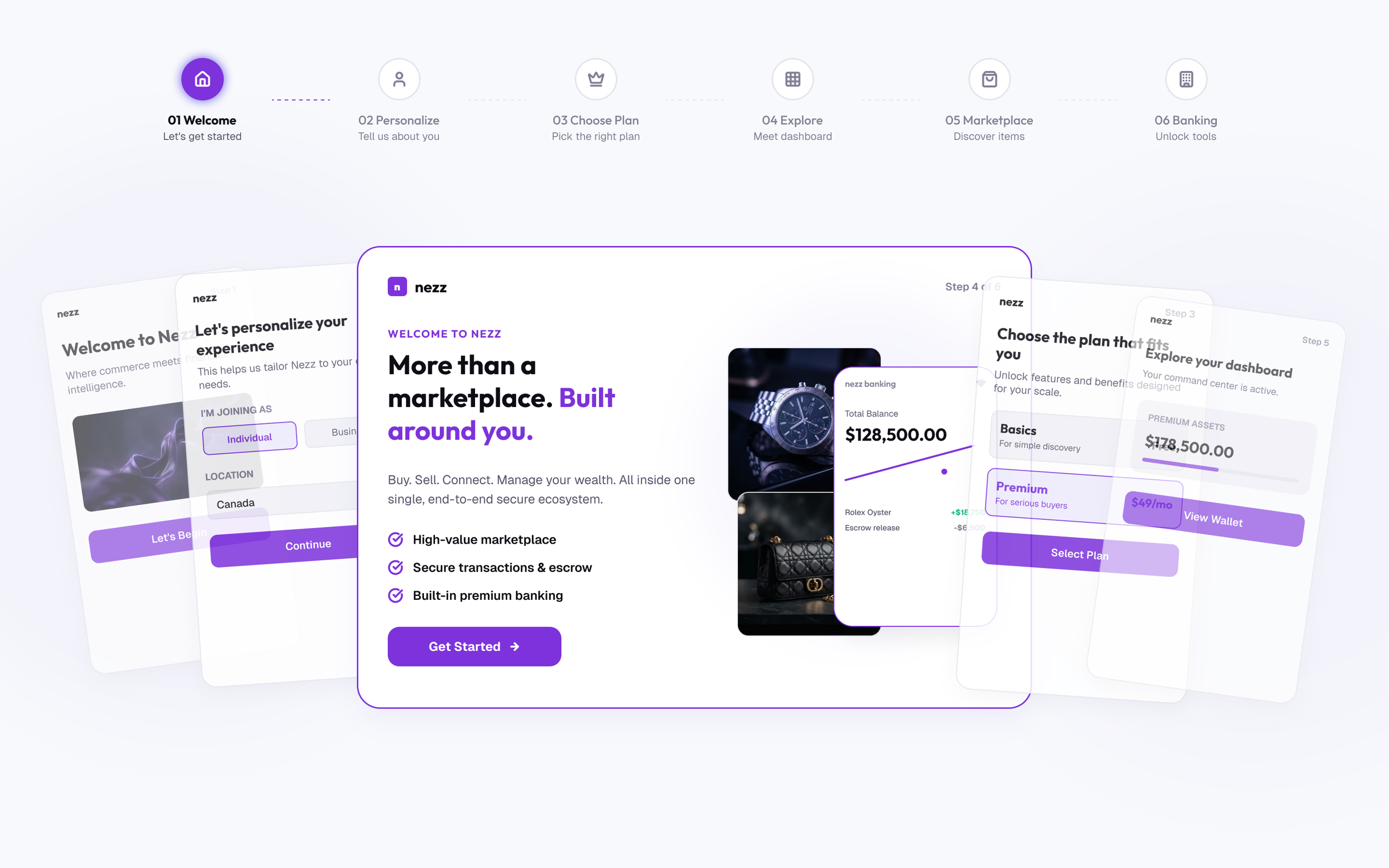
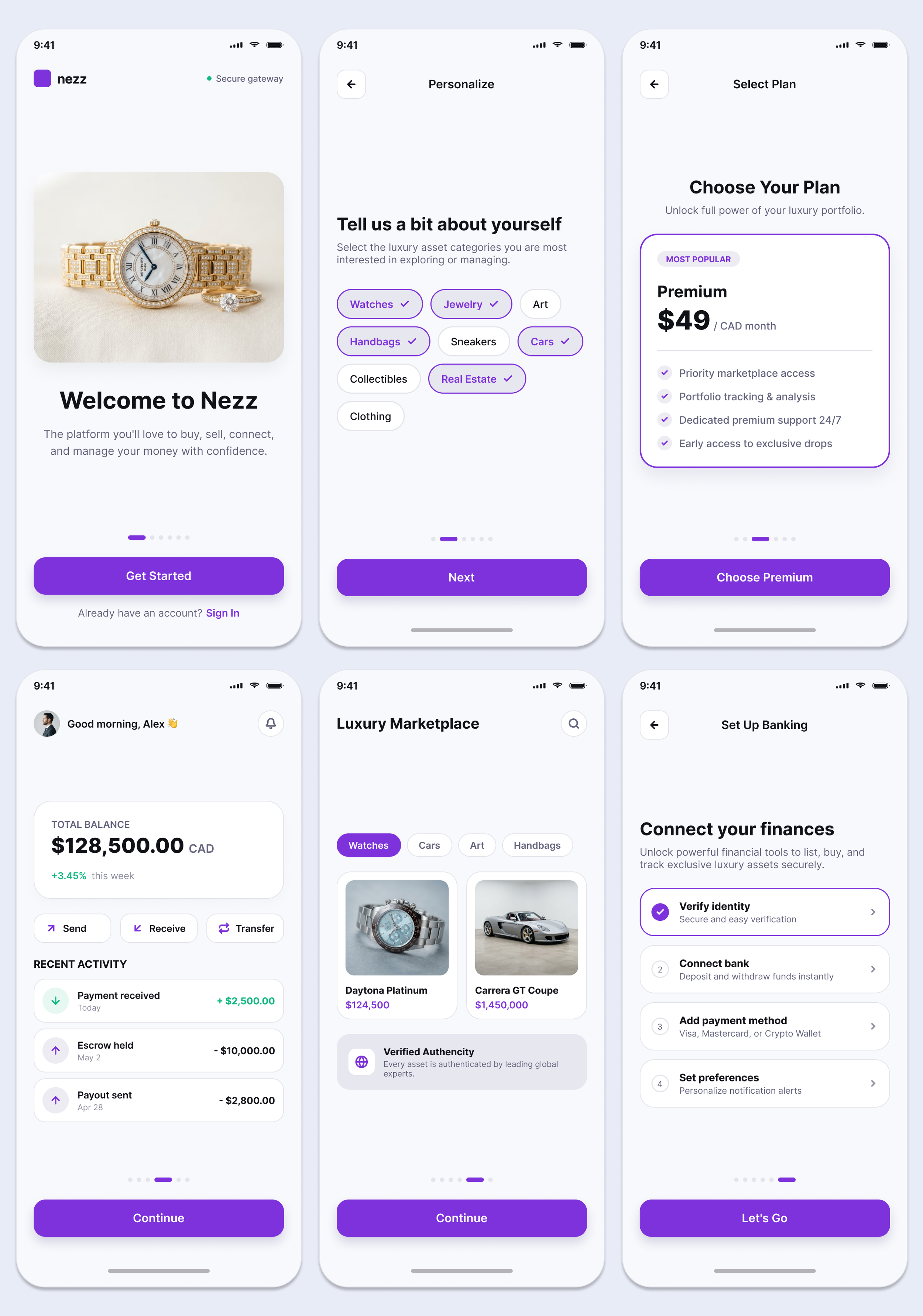
A guided path into everything Nezz has to offer
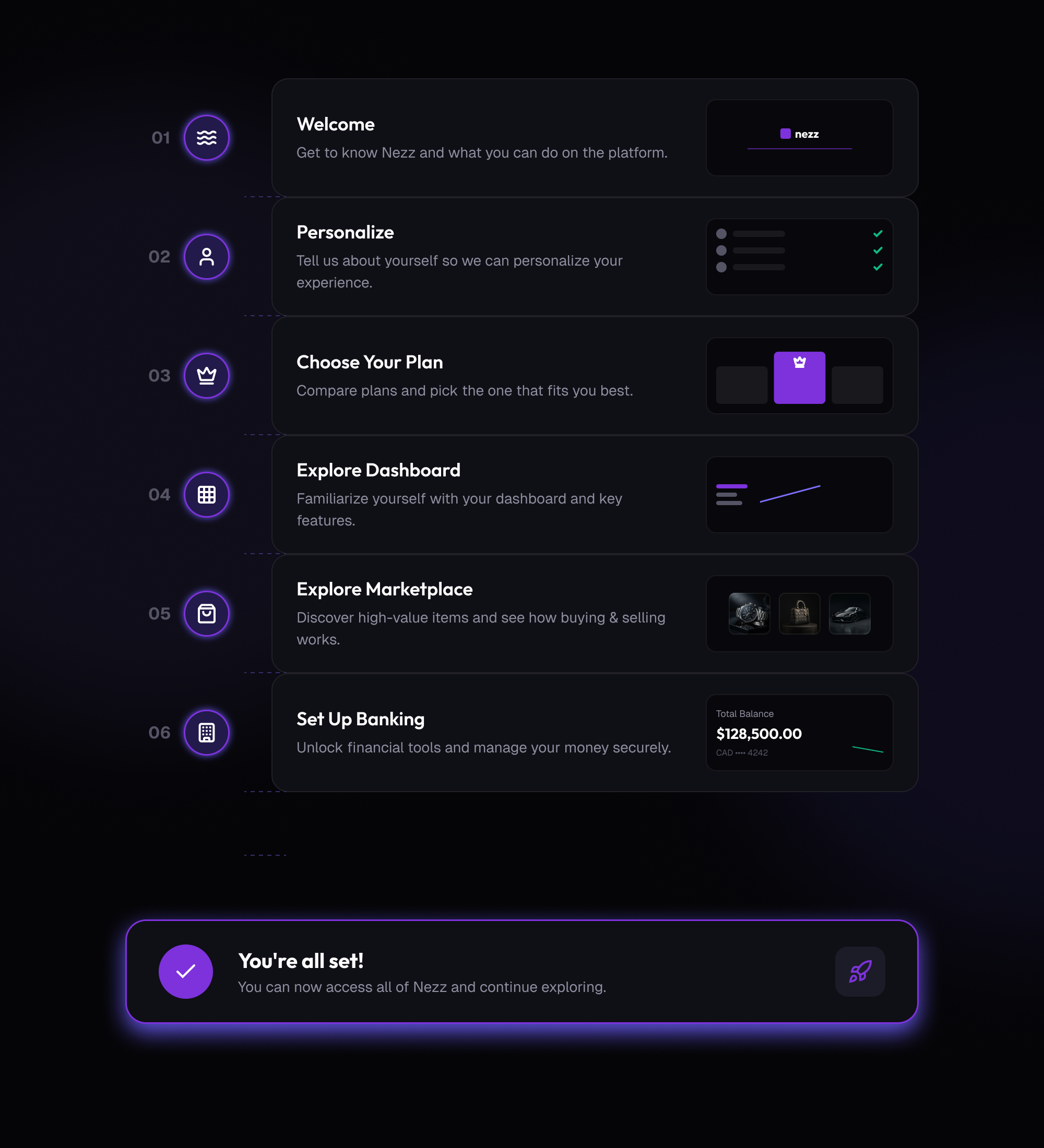
Onboarding is broken into clear stages, so the user is always informed on what’s next and what to expect and how close you are to getting started.
Teach first ask when necessary
It was important to introduce information in the correct order. Helping users understand Nezz step by step and only asking for what’s needed at right stage.
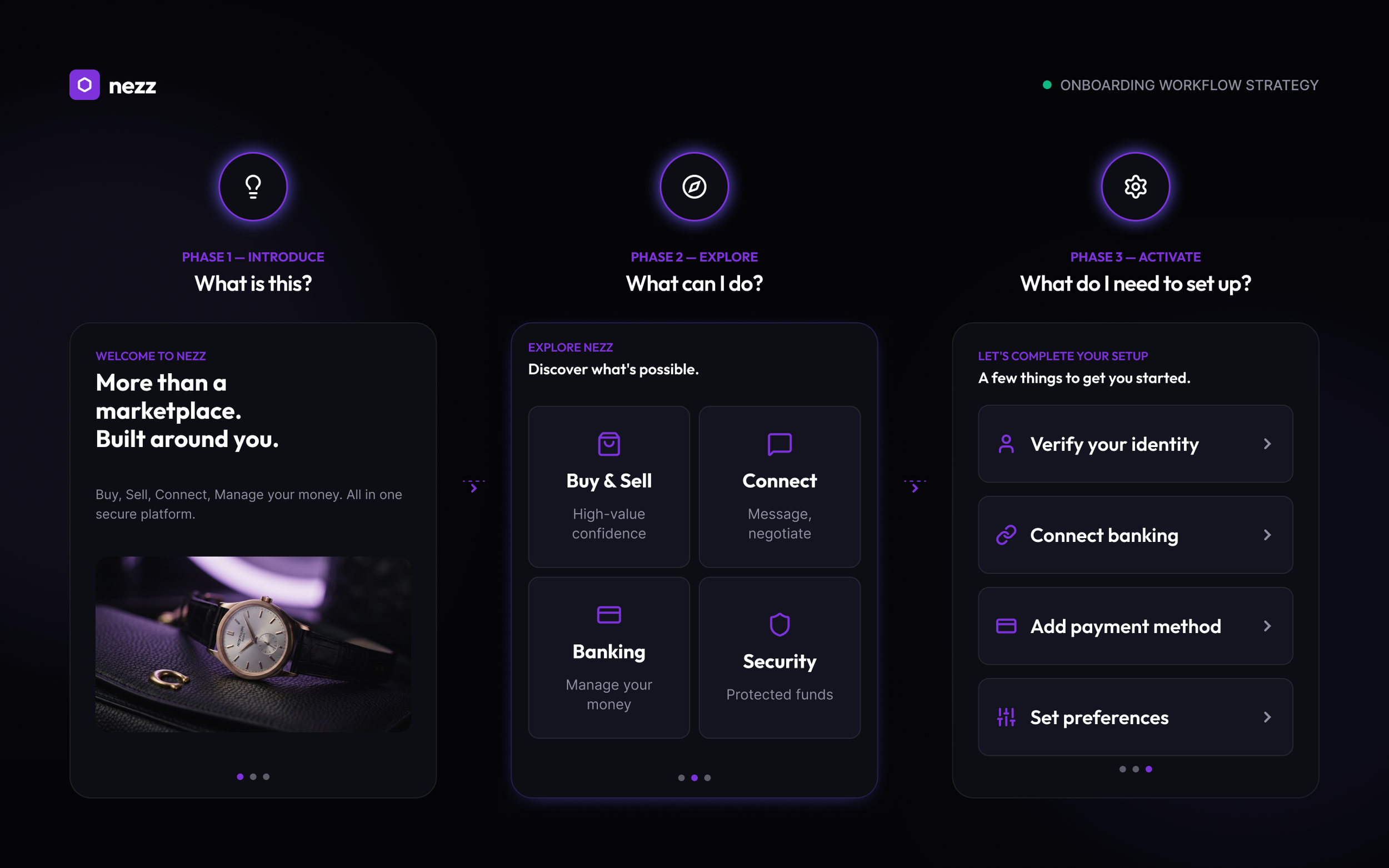
01 — Welcome Experience
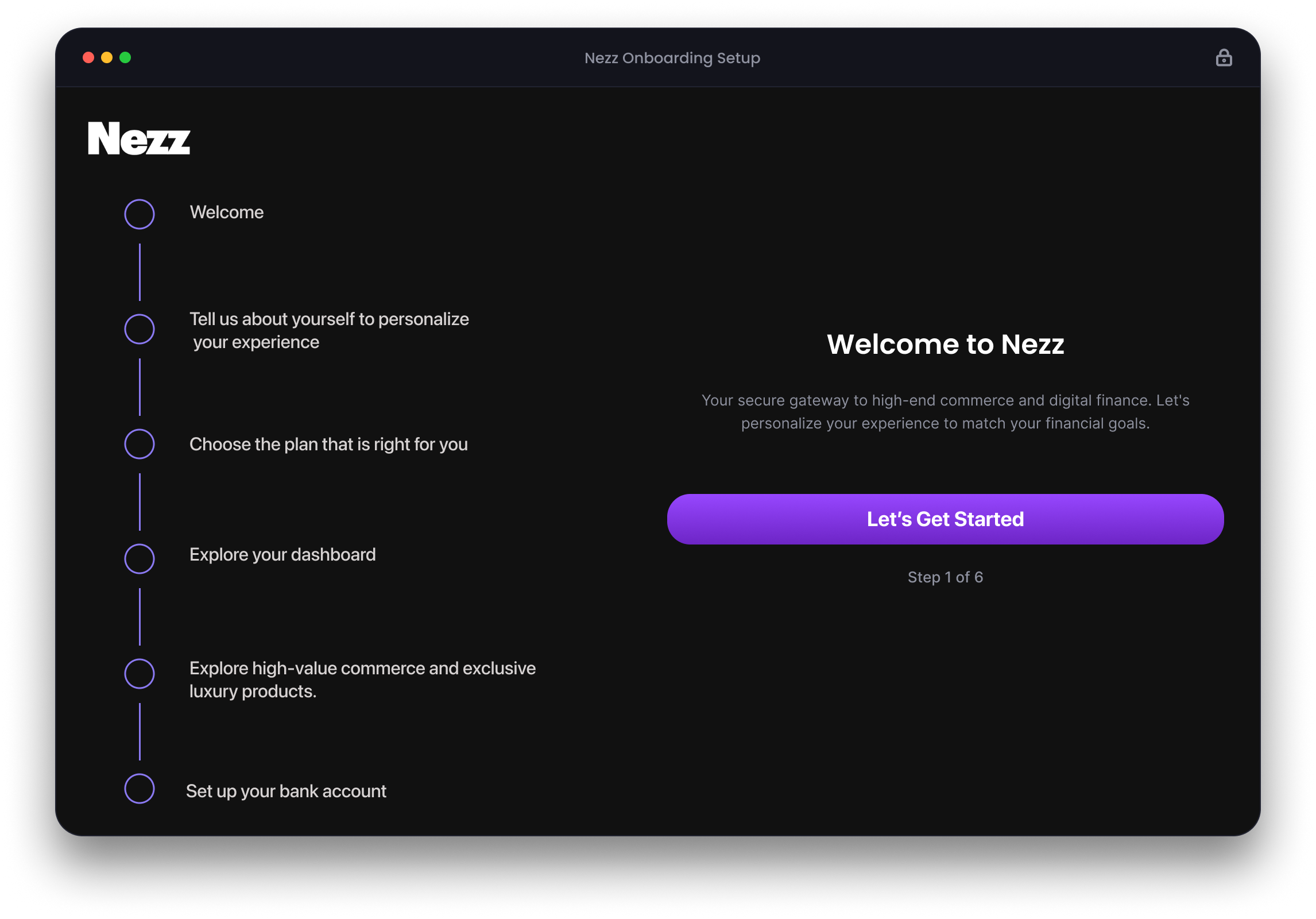
Welcome & Navigation Architecture
Our entry interface is anchored by a persistent, high-fidelity progressive stepper. By charting the 6-step registration process immediately, we set clear expectations and lower cognitive anxiety for users onboarding into Nezz.
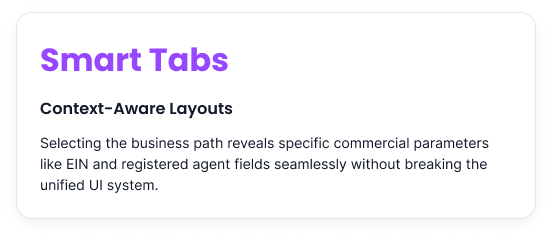
By classifying users into Individual or Business segments early, Nezz shapes the subsequent portal layout dynamically. This split guarantees that retail luxury collectors and corporate financial managers get exact feature matches instantly.
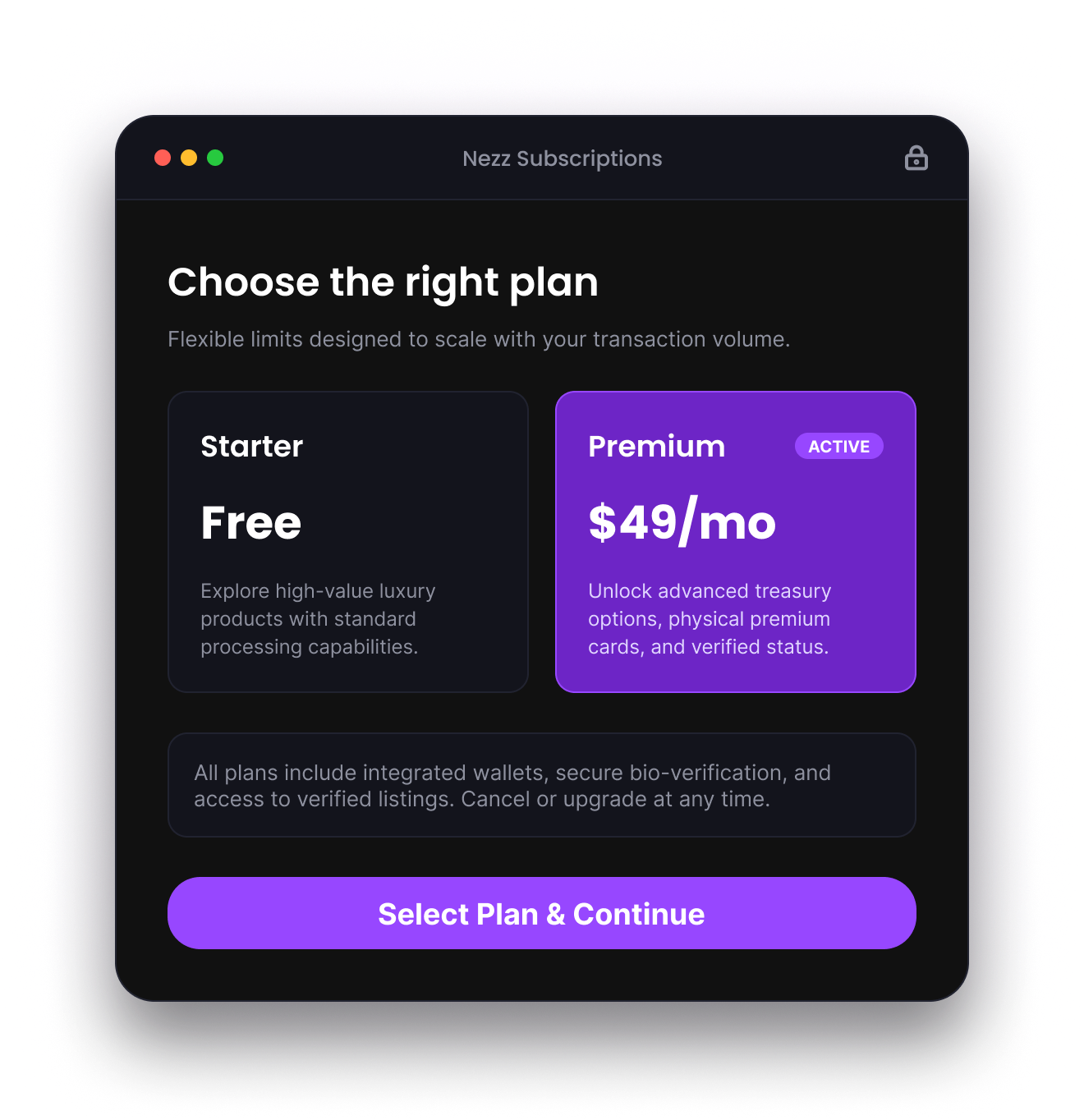
03 — Value Selection
Presenting a simplified matrix of choices. By keeping the design highly interactive, users instantly comprehend limits, features, and target profiles before committing to banking configurations.
02 — Interest Segmentation
Dual-Path Entry Flow
03 — Guidance
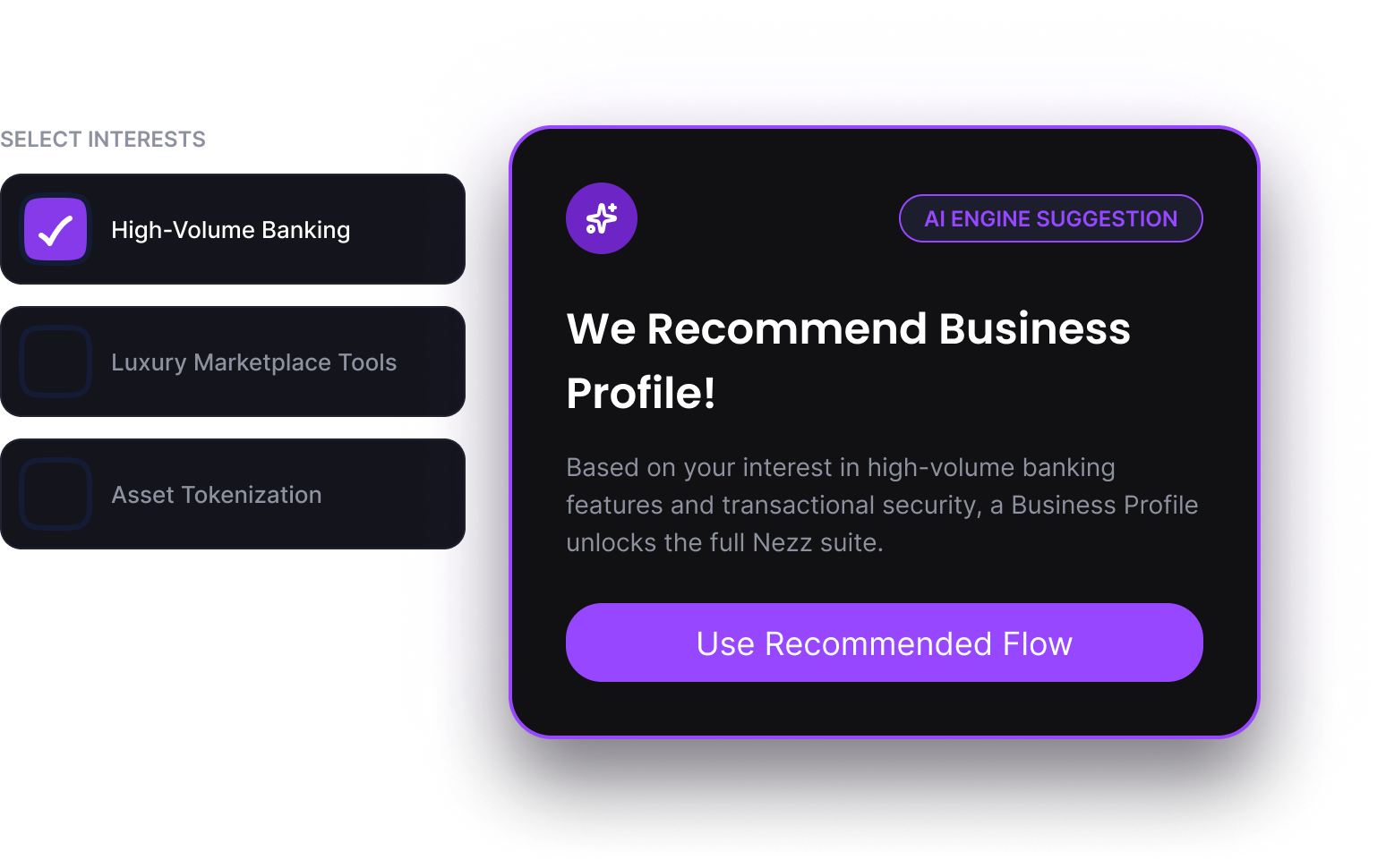
Interest Alignment & Recommendation
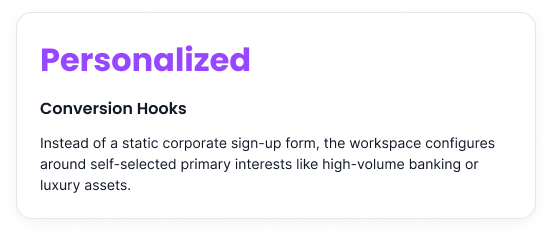
We replace guesswork with intelligence. As the user selects interest items, Nezz analyzes their goals in the background and presents a contextual profile suggestion with clear value propositions.
03 — Personalization Engine
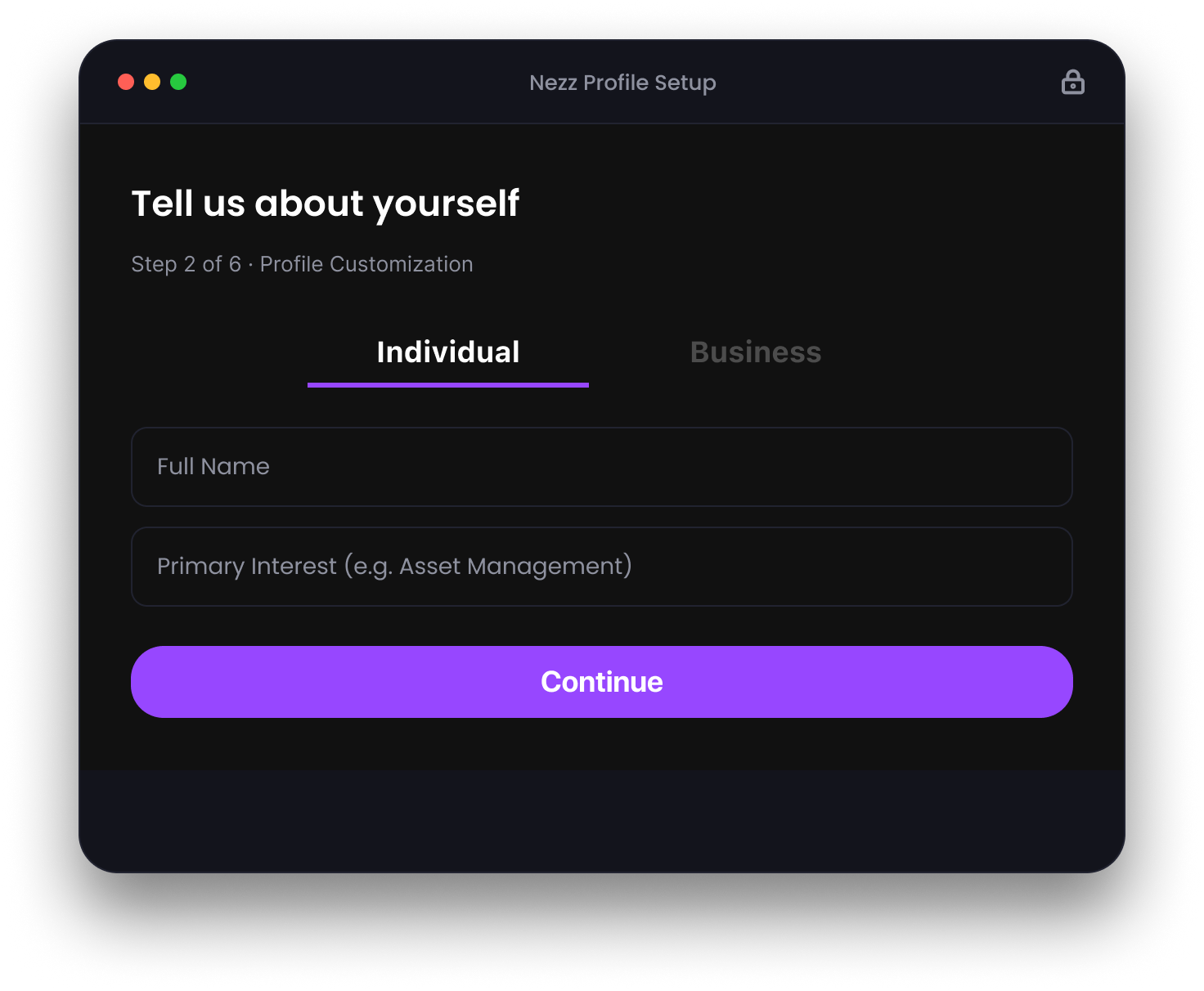
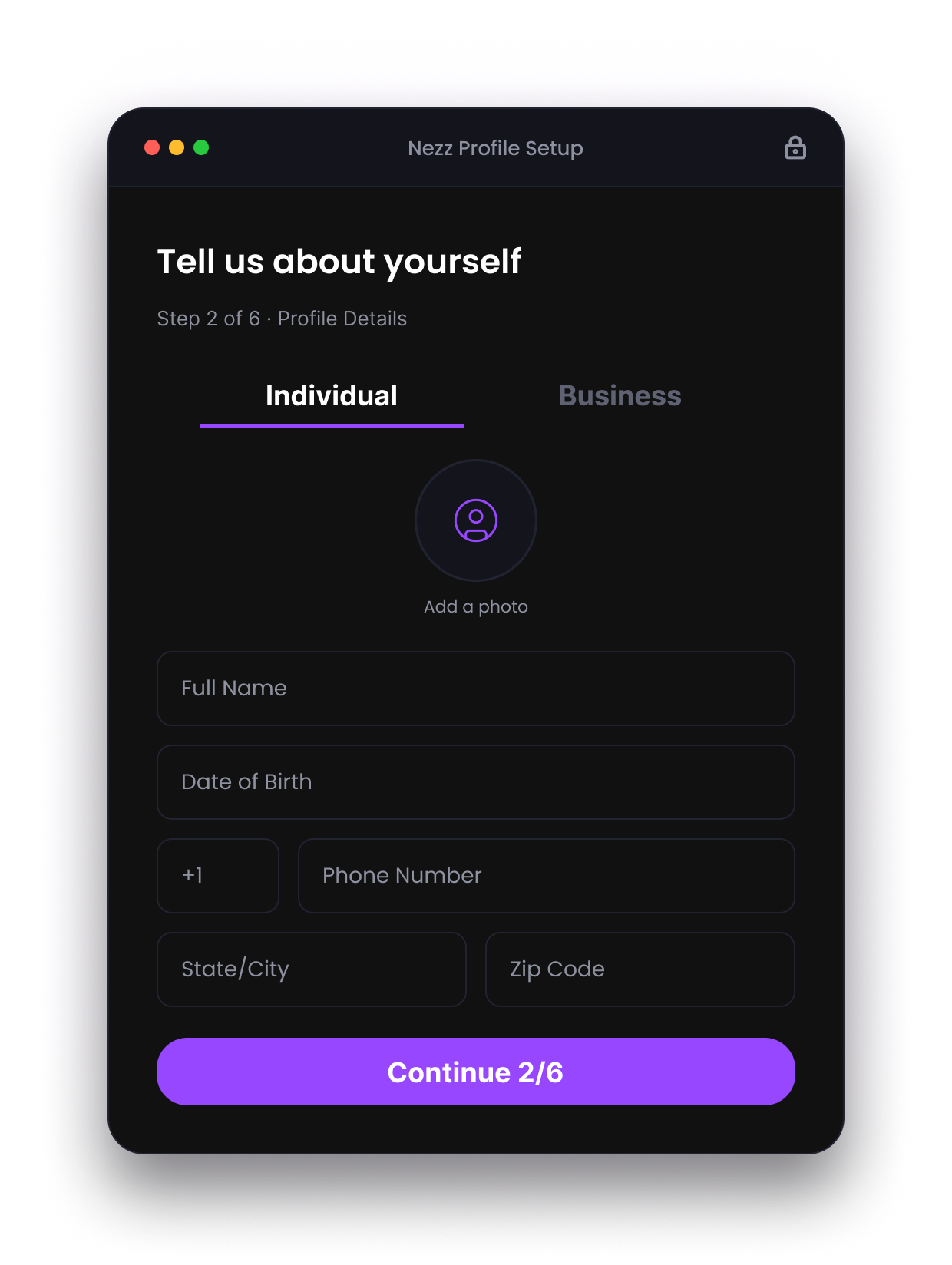
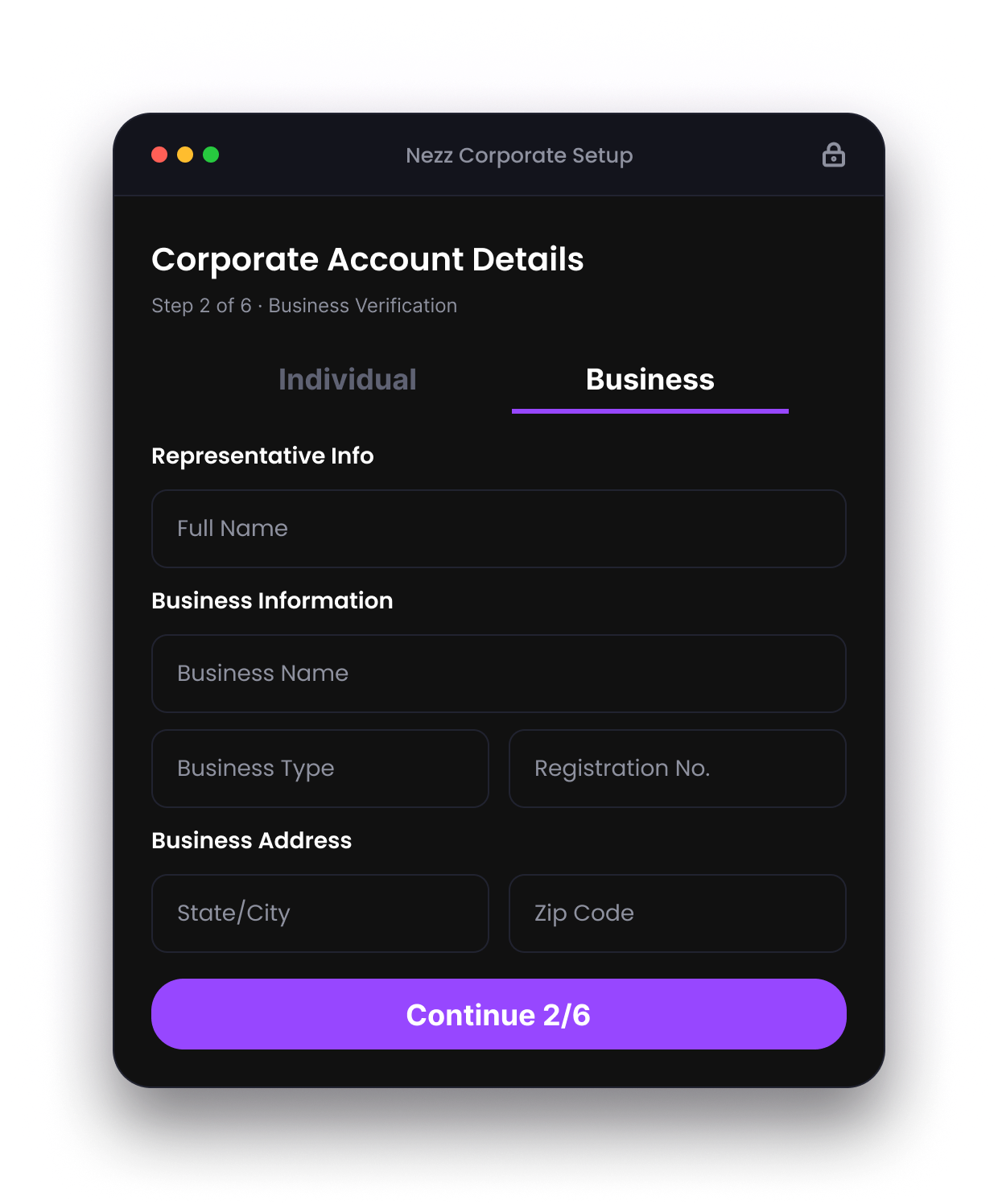
Individual or Business Profile Personalization
Elegantly collects key personal information (Full Name, Date of Birth, Phone Number) without adding friction. High-end inputs are scaled and styled for high-contrast presentation on a white viewport.
A specialized pathway that triggers extended corporate fields. The tab toggle seamlessly switches viewport states, exposing fields for Business Name, Type, and Address parameters.
Interactive Plan Optimization
Modular UI System Details
Nezz Flow Atoms

Outcome
My work established a structured onboarding experience that introduced users to Nezz while guiding them through the information and decisions required to begin using the platform. Rather than treating onboarding solely as account creation, the experience connected setup, personalization, product education, and exploration into one journey. The completed designs provided the founders and engineering team with a defined onboarding direction that could be reviewed, refined, and prepared for implementation.
This project changed how I think about introducing users to complex products. When a platform has many capabilities, it can be tempting to explain everything immediately. But more information doesn't necessarily create more understanding.
If I revisited the experience today, I would validate each onboarding stage through usability testing and measure where users hesitate, skip, or leave the flow. I would also explore whether certain setup requirements could be deferred even further until users demonstrated intent to use the corresponding feature. The lesson I continue to carry into my work is, Onboarding isn't about teaching users the whole product. It's about giving them enough confidence to begin.